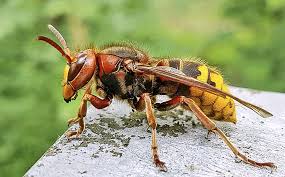
The Vespa crabro (European wasp) is the largest socially organized wasp in Europe and the largest wasp species in North America. They are carnivorous and eat large insects: mainly wasps, large moths (butterflies, moths, etc.), and other large bees. The wasp is a centrifugal insect. They have very little fur and are very brightly coloured. They look armored compared to bees and are hunters of other insects, including bees. The wasp, unlike the bee, survives after a sting. They also form societies but much smaller. They have two pairs of wings, stinger (ovipositor) only in females, little or no fur (unlike bees) Only some parasitic groups are aquatic. Some species of Pompilidae, such as the wasp Tarantula hawks, use spiders or other arachnids as reproductive hosts. Wasps are particularly important in balancing species in nature. For almost every insect pest species, there is a wasp species that is a predator-parasite on it.